A website is often the first place where potential customers interact with a business. Before reading service details or contacting a company, visitors quickly form opinions based on what they see and how easily they can navigate the website. This first impression happens within seconds and can influence whether a user stays, explores further or leaves.
Website layout refers to how information, images, buttons and sections are arranged across a page. A clear and intentional layout helps visitors understand what a business offers, where to find information and what action to take next. When a website feels organized and easy to use, it naturally builds confidence.
On the other hand, a confusing or poorly structured website can create hesitation. Visitors may question the professionalism of the business, feel uncertain about the services offered or simply leave due to frustration. Layout is therefore not only a design decision but also an important part of online credibility. A well planned layout supports trust by guiding users smoothly through the website. It reduces mental effort, improves clarity and helps customers feel more comfortable engaging with the business.
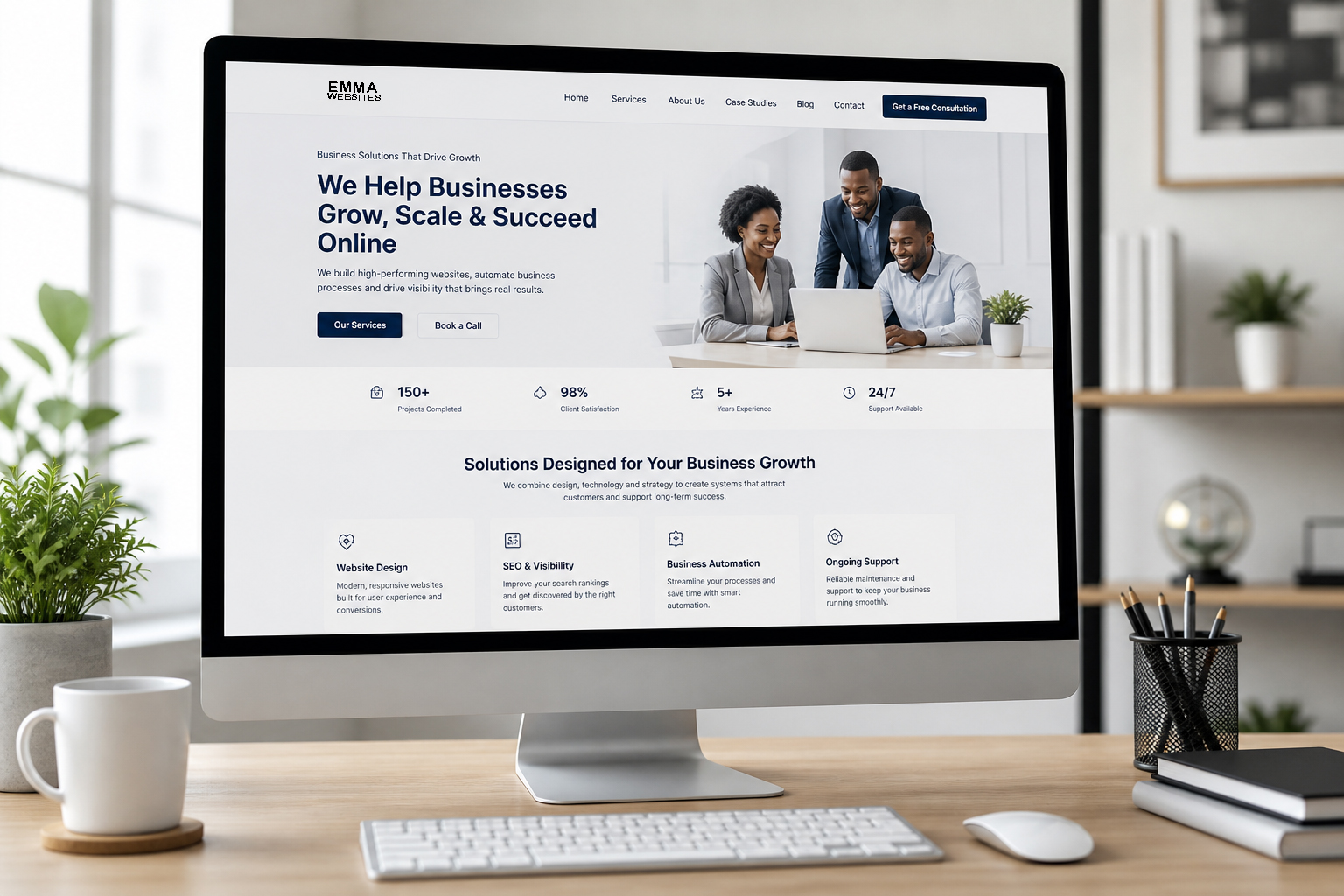
Visitors often judge trustworthiness visually before they evaluate actual content. Clean spacing, clear navigation and properly organized sections make a website feel more reliable. This reduces friction and helps users continue browsing comfortably.
What Makes a Website Feel Trustworthy at First Glance
A layout that supports trust usually includes:
- Clear navigation menus that make everything easy to find
- A balanced, professional design that feels reliable and polished
- Readable typography that doesn’t strain the eyes
- Visible contact information so users know how to reach you
- Mobile responsiveness for a smooth experience on all devices
- Fast loading speed that keeps users from leaving early
- Consistent spacing between sections so the page feels clean and calm
- A well-organized content structure that guides attention naturally
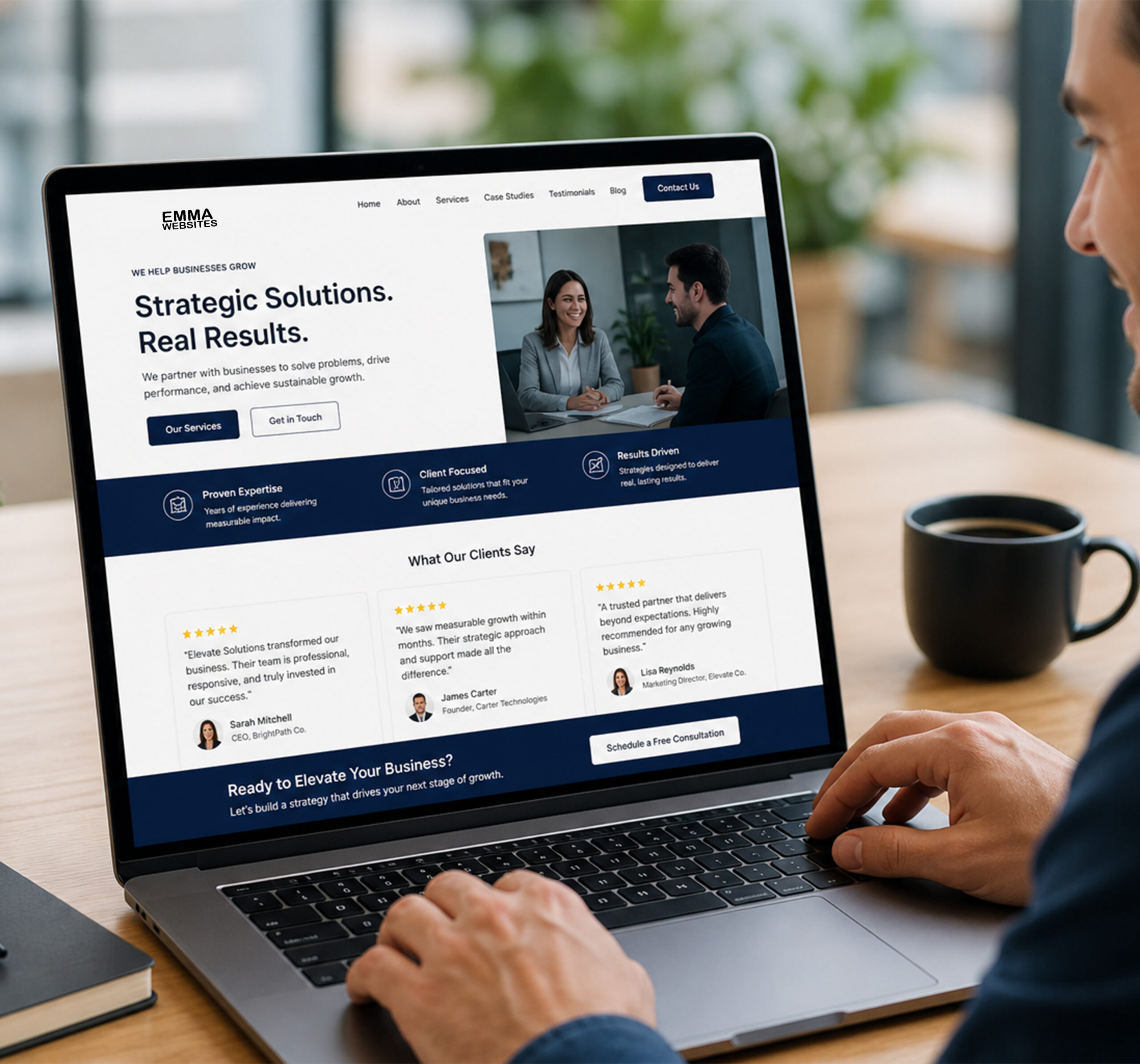
A strong layout also helps businesses communicate professionalism without saying much. Sections should flow naturally from one point to another, guiding visitors from introduction to service details, proof and contact opportunities. This journey should feel intentional rather than overwhelming.
For example, a homepage should usually introduce the business clearly, explain what is offered and make the next step obvious. This is why
website design
should always be approached strategically rather than purely visually.
Common Layout Issues That Reduce Trust
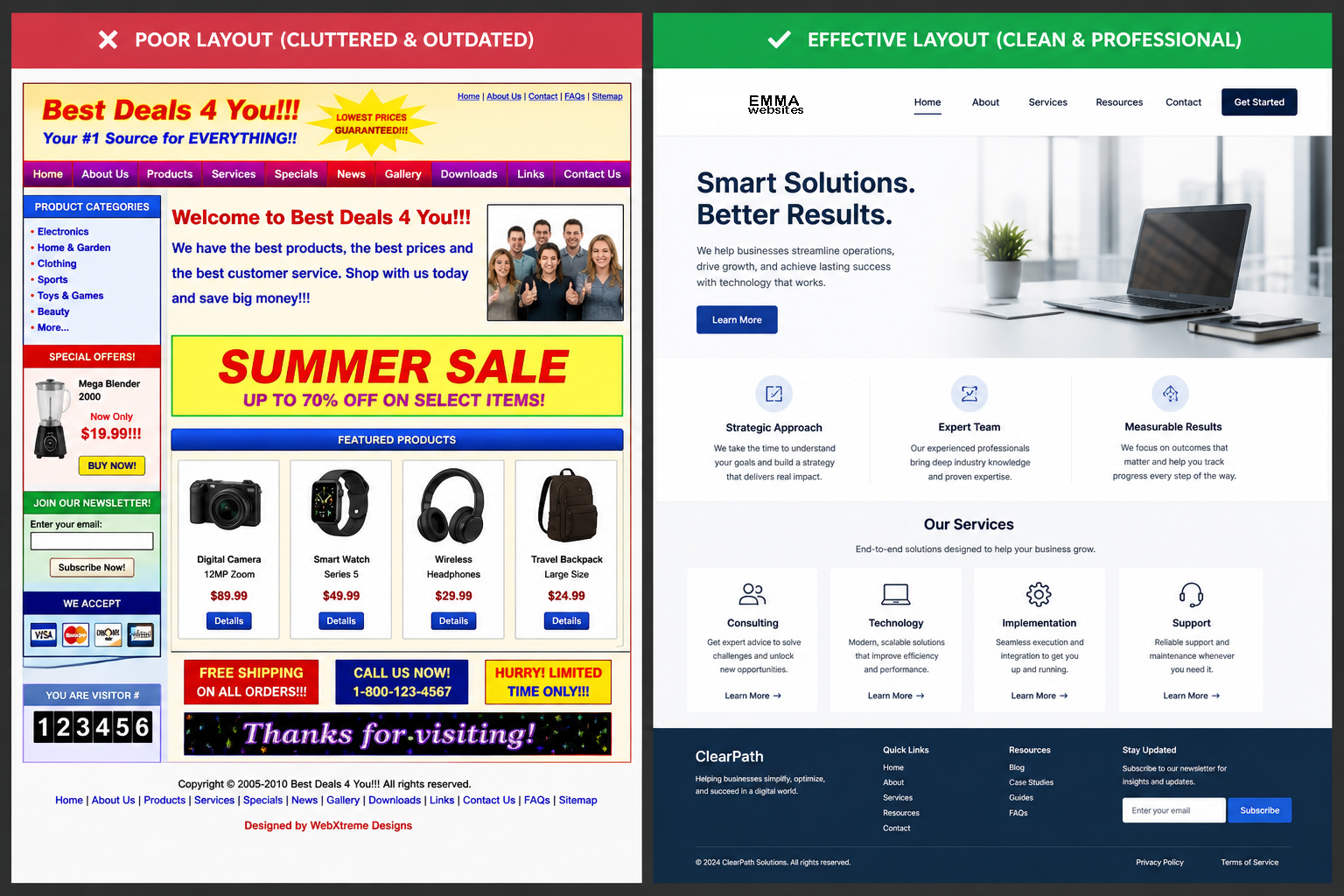
Some website layout issues can quietly reduce customer confidence, even when the business itself offers strong services. Problems such as overcrowded pages, inconsistent colors and spacing, and poor mobile responsiveness can make a site feel unstructured and unprofessional. When visitors struggle to read content or find information quickly, it often creates doubt about the overall credibility of the brand.
Other common issues include unclear calls to action, excessive popups or distractions, and difficult navigation. These elements interrupt the user experience and make it harder for customers to move smoothly through the website. As a result, even high-quality services may be overlooked simply because the website does not feel easy, clear, or trustworthy to use.
A website should make it easier for customers to understand your business and feel confident taking the next step. Layout plays an important role in shaping that experience by improving clarity, reducing confusion and supporting trust from the first interaction.
As customer expectations continue to rise, businesses benefit from websites that combine structure, usability and long term performance. A well organized layout is often one of the simplest ways to strengthen online credibility and improve user experience.
Businesses looking to improve
online presence
often start by reviewing how their website is structured, how users navigate pages and whether the layout supports business goals effectively. For businesses that need support with this process, Emma Websites provides structured solutions built around usability, visibility and business growth.