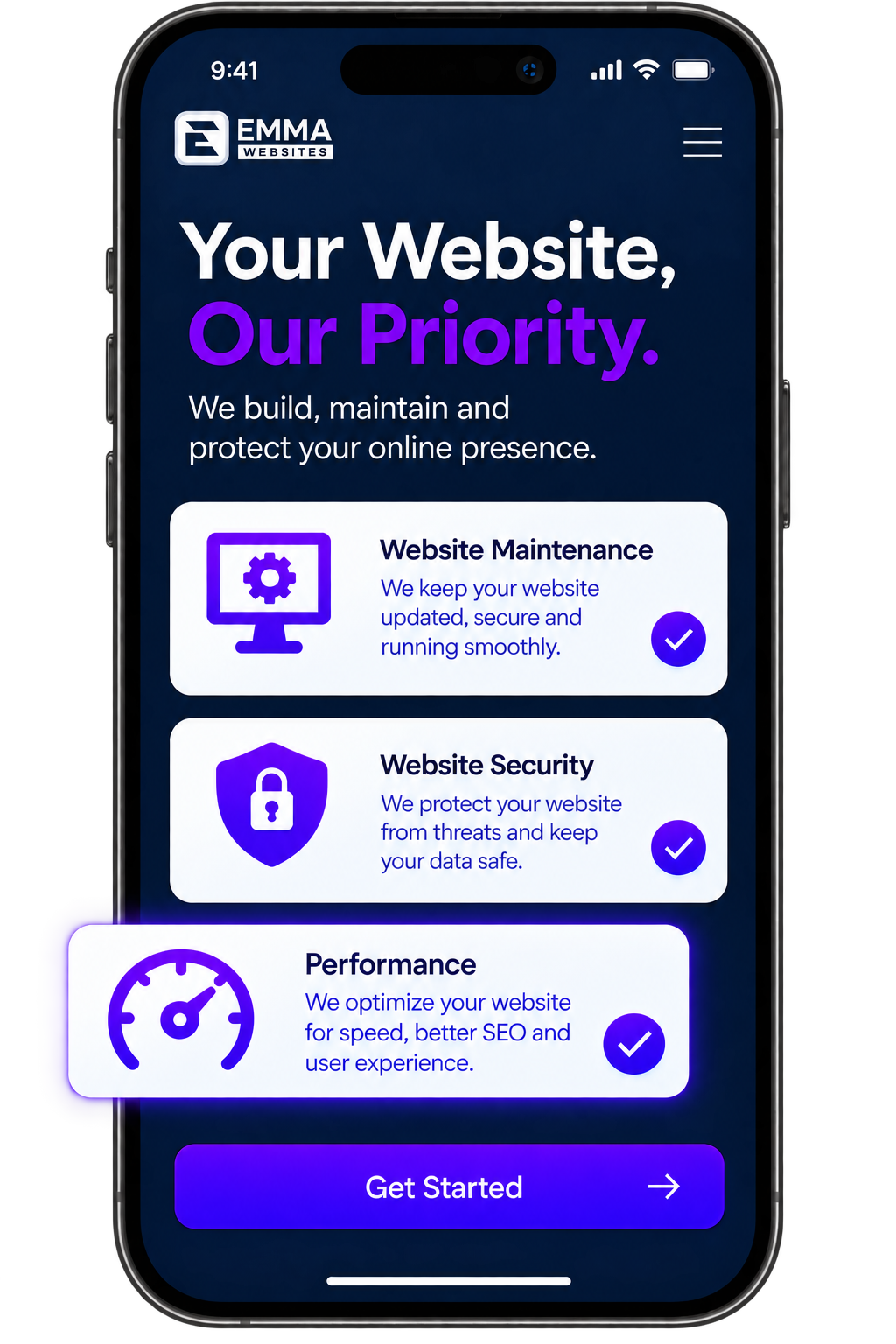
Building a website is only the beginning. After your website is live, it still needs regular attention to remain secure, updated, reliable and fully functional. Without ongoing maintenance, software can become outdated, technical problems can develop, website performance can decline and security vulnerabilities can leave your website exposed.
Website maintenance and security support from
Emma Websites
helps keep your website monitored and properly maintained while you continue using your existing domain and hosting provider. The goal is to reduce preventable problems, protect your website and make sure it continues to work properly for your visitors and your business.
01
Keep Your Website Updated
Websites depend on software, plugins, themes, content management systems and other technologies that change over time. Regular updates help maintain compatibility, fix bugs and reduce problems caused by outdated software.
02
Reduce Security Risks
Security monitoring, malware checks, login protection and regular updates help reduce vulnerabilities that could be used to gain unauthorized access to your website.
03
Protect Against Data Loss
Regular backups provide a recovery point if your website experiences a technical failure, harmful update, security incident or accidental change.
04
Maintain Website Performance
Database cleanup, caching, file optimization and regular performance checks help prevent unnecessary website slowdowns and keep pages running smoothly.
05
Find Problems Before Visitors Do
Uptime monitoring, broken link checks, form testing and error monitoring can identify problems early so they can be corrected before they seriously affect visitors or business activity.
06
Keep Your Website Reliable
Ongoing technical support helps maintain the website as your business changes, reducing unexpected problems and helping the website remain dependable over time.
When reviewing a website maintenance or security plan, you may come across technical terms that are not immediately clear. Understanding the basics makes it easier to know what is being monitored, protected or improved on your website.
Below are some of the main terms used across our website support services and what you can expect when they are included in your plan.
Software Updates
Software updates keep your website platform, plugins, themes and other website components current. Updates can include bug fixes, compatibility improvements, new features and important security patches.
What to expect:
We check and apply appropriate updates while monitoring the website for problems that may occur after changes are made.
Website Backups
A website backup is a saved copy of your website files and database that can be used if the live website becomes damaged, unavailable or compromised.
What to expect:
Backups are created according to your support plan so there is a recent recovery point available when restoration is required.
Security Monitoring
Security monitoring involves checking your website for suspicious activity, unauthorized access attempts, unusual changes and other signs of a possible security problem.
What to expect:
Your website is reviewed for potential security concerns so issues can be identified and investigated more quickly.
Malware Scanning
Malware scanning checks website files and other areas for malicious code, infected files, hidden scripts, backdoors and other potentially harmful content.
What to expect:
Security scans help identify suspicious files or website changes that may require further investigation or cleanup.
SSL Certificate
An SSL certificate enables the HTTPS connection used to encrypt information transferred between your website and a visitor's browser.
What to expect:
We can monitor the website's HTTPS connection and SSL status so certificate-related problems can be identified before they affect visitors.
Website Firewall
A website firewall helps filter incoming website traffic and can block certain malicious requests, suspicious bots and known attack patterns before they reach the website.
What to expect:
Where supported by your website or hosting environment, firewall protection can be configured or reviewed as part of your security setup.
Two-Factor Authentication (2FA)
Two-factor authentication adds an additional verification step when someone signs in, making a stolen password alone less useful to an attacker.
What to expect:
Where appropriate, additional login verification can be configured for important website accounts and administrative users.
Uptime Monitoring
Uptime monitoring checks whether your website is accessible online and helps identify periods when the website may be unavailable.
What to expect:
Your website can be monitored for availability so unexpected downtime can be noticed sooner and investigated.
Performance Optimization
Performance optimization focuses on improving how efficiently your website loads and operates. This may involve caching, database cleanup, image optimization and reducing unnecessary files or processes.
What to expect:
The website is reviewed for performance problems and suitable improvements are applied based on the website and hosting environment.
Website Cache
Caching stores temporary versions of website content so some information can be delivered more quickly without being rebuilt every time someone visits a page.
What to expect:
Cache settings can be reviewed and optimized to improve loading performance while avoiding conflicts with important website functions.
Database Optimization
Your website database stores information such as pages, settings, users, form data and other website records. Over time it can accumulate unnecessary information.
What to expect:
Unnecessary database records can be cleaned and tables optimized where appropriate to help keep the website organized and efficient.
Broken Link Checks
Broken links occur when a website link points to a page, file or external resource that is no longer available or has moved.
What to expect:
Important links, buttons and pages can be checked so broken destinations can be corrected and visitors are not unnecessarily sent to missing content.
Form Testing
Website forms include contact forms, quote requests, registrations, booking forms, newsletter forms and other areas where visitors submit information.
What to expect:
Important forms can be tested to confirm that submissions are working and information is being delivered as expected.
Error Monitoring
Website errors can include missing pages, server errors, plugin conflicts, PHP problems, JavaScript errors and other technical issues that affect functionality.
What to expect:
Technical problems can be identified, reviewed and corrected based on the type of issue and the level of support included in your plan.
Login Security
Login security helps protect administrative areas from repeated password attempts, suspicious users and unauthorized account access.
What to expect:
Login protections may include limiting attempts, reviewing administrator access and strengthening authentication where appropriate.
User Access Management
User access management controls what different users are allowed to view, edit or manage inside your website.
What to expect:
User roles and administrative access can be reviewed so people have the level of website access appropriate to their responsibilities.
Spam and Bot Protection
Automated bots can submit fake forms, create unwanted accounts, publish spam or repeatedly access parts of a website.
What to expect:
Appropriate anti-spam and bot controls can be configured to reduce unnecessary automated activity on supported website forms and features.
Website Recovery
Website recovery is the process of restoring a website after a serious technical problem, failed update, data loss or security incident.
What to expect:
Where recovery is included in your support plan, available backups and website information can be used to help restore functionality and investigate what caused the problem.